Best Bedroom Doors from China for Global Buyers?
Choosing the best bedroom doors from China requires more than comparing catalog prices. Global buyers must examine design, materials, manufacturing consistency, and communication quality. A well-made door should close smoothly, reduce everyday noise, and remain stable through seasonal humidity changes. Solid wood, engineered wood, glass, and composite options each suit different projects. The right choice depends on climate, room function, budget, and installation conditions.
Reliable bedroom doors often begin with clear specifications. Ask suppliers for core construction, surface finishes, thickness, moisture resistance, hardware details, and packaging methods. Request photographs of factory production and completed projects, not only polished showroom images. Samples can reveal uneven edges, weak coatings, or color differences that digital pictures hide. Small details matter. A quiet hinge matters.
Experienced buyers should also verify factory capacity, quality inspection procedures, export experience, and after-sales communication. Independent inspections may help confirm dimensions, finish quality, and carton protection before shipment. Compliance requirements can vary by destination, so buyers should check local building, fire, safety, and environmental standards with qualified professionals. Supplier claims deserve careful review. Trust needs evidence.
This guide explores practical ways to compare Chinese door manufacturers and select bedroom doors for residential, hospitality, and development projects. It also considers customization, lead times, minimum order quantities, and installation support. Some recommendations may not fit every market. That is worth admitting. A beautiful door can still disappoint if its frame, hardware, or delivery plan is poorly matched. Good sourcing balances appearance with performance, documentation, and dependable cooperation.
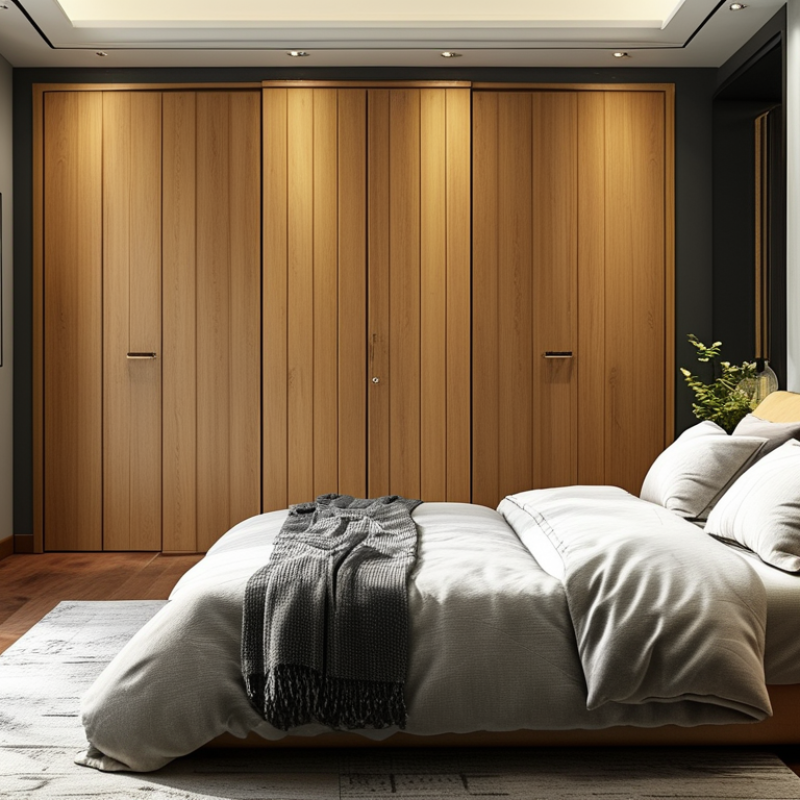
What Makes a Chinese Bedroom Door Suitable for Global Buyers
A Chinese bedroom door suits global buyers when it fits local climate, building codes, and daily habits. Bedroom doors cross humid ports, dry interiors, and cold warehouses. Their core must resist swelling, warping, and repeated opening. The UNEP 2023 Global Status Report states that buildings used 30% of global final energy in 2022. Better sealing, durable materials, and responsible sourcing therefore matter. Details matter.
Buyers should request moisture testing, formaldehyde-emission results, and stable dimensional tolerances. Acoustic performance deserves attention too. ISO 10140 and ISO 717-1 provide recognized methods for measuring sound insulation. A door advertised as “soundproof” without a tested rating is not enough. Fire performance may require testing under EN 1634-1 or an equivalent local standard. Requirements differ between countries. Measure twice.
Factory quality is only one part of suitability. Packaging should protect corners, hinges, and painted surfaces during long-distance transport. The World Bank’s 2023 Logistics Performance Index assesses customs, infrastructure, tracking, and delivery timeliness. These factors can influence the real purchase cost. Ask for inspection records, batch photographs, installation drawings, and replacement-part policies. A lower quotation may hide thinner skins or weaker hardware. I would not assume every “engineered wood” core performs equally; buyers should verify density, adhesive safety, and humidity resistance through independent documents.
Main Types, Materials, Designs, and Finishes of Chinese Bedroom Doors
Chinese bedroom doors offer global buyers a wide mix of types, materials, designs, and finishes. Grand View Research estimates the global doors market exceeded USD 90 billion in 2023, with renovation and residential construction supporting demand. China remains important because factories can combine solid timber, engineered wood, glass, and metal details in one project.
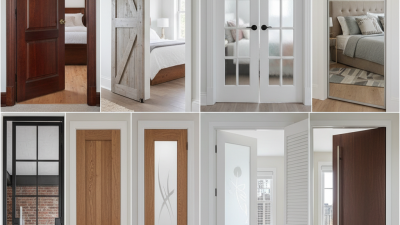
Common types include hinged, sliding, pocket, and barn-style doors. Hinged doors suit most bedrooms and simplify installation. Sliding doors save floor space, but their tracks need careful alignment. Solid wood feels warm and substantial. Engineered wood usually provides better dimensional stability in humid conditions. Medium-density fiberboard supports smooth painted surfaces, although damaged edges can be difficult to repair.
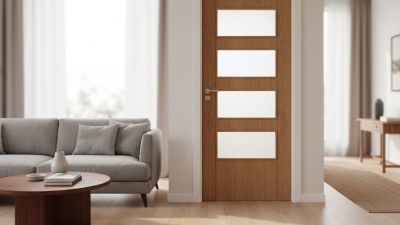
Design choices range from flat panels to fluted faces, thin frames, and concealed hinges. Popular finishes include natural veneer, matte paint, wood-effect laminate, and textured foil. The Freedonia Group identifies customization and improved interior aesthetics as important influences in door demand. Buyers should request moisture content records, core specifications, finish samples, and packaging photographs before production. Small details matter.
A practical specification should state door thickness, opening direction, hardware grade, tolerance, and carton protection. European and North American projects may also require documented acoustic or fire-performance testing. Do not rely on attractive samples alone. Color can shift under different lighting, and veneer patterns rarely match perfectly across multiple doors. That imperfection needs written approval. Some suppliers communicate well during sampling but respond slowly after payment; this risk deserves a measured inspection plan and staged quality checks.
Key Quality, Safety, and International Compliance Standards
Best Bedroom Doors from China for Global Buyers?
Bedroom doors from China can offer strong value, but quality depends on measurable controls. Inspect the core, not only the painted surface. Solid wood, engineered wood, and honeycomb cores behave differently under humidity changes. Check panel flatness, edge sealing, veneer bonding, and moisture content before shipment. For many wood products, a moisture range near 8–12% may be suitable, but the destination climate must guide the specification.
Safety requirements need equal attention. If the door includes glass, request impact and safety-glazing evidence, such as testing aligned with EN 12150 or applicable local rules. Fire-rated bedroom doors require tested assemblies, not just fire-resistant materials. Ask for reports referencing standards such as EN 1634-1 or ASTM E119 when relevant. The complete set matters: leaf, frame, hinges, seals, lockset, and installation method. A strong door can fail when the frame is poorly fitted.
International compliance also covers formaldehyde emissions, labeling, packaging, and documentation. Request test reports from laboratories accredited to ISO/IEC 17025, then verify the report number and tested model. Confirm dimensions in millimeters, opening direction, tolerances, and hardware compatibility in writing. Factory quality systems aligned with ISO 9001 can improve consistency, but certification alone proves little. A common weakness is trusting photographs too much. Pre-shipment inspection, sample approval, and moisture checks remain practical safeguards. Mistakes still happen, especially when specifications are translated loosely. Clear drawings reduce that risk.
How to Evaluate Chinese Bedroom Door Manufacturers and Suppliers
Choosing a Chinese bedroom door supplier requires more than comparing catalog prices. I inspect factory records, not only polished photos. Ask for production capacity, material specifications, moisture limits, and recent export references. A reliable manufacturer should explain core construction, veneer thickness, paint system, and packaging tests clearly. ISO’s 2022 Survey recorded over 1.2 million ISO 9001 certificates worldwide, but certification alone cannot prove door quality. Request the certificate number and verify its scope.
Sample inspection matters. Check hinge cutouts, edge sealing, surface flatness, and color consistency under natural light. Measure the sample yourself. A door may look solid but contain unstable filler or poorly bonded layers. Request test reports for formaldehyde emissions, fire performance, and acoustic ratings when required by your market. Confirm whether reports cover the exact model, not a similar product. China scored 3.7 out of 5 in the World Bank’s 2023 Logistics Performance Index, yet delivery performance still varies between factories. My own weak point would be trusting a promising sample too quickly.
Tips: Use a written specification sheet with tolerances, hardware details, carton dimensions, and inspection points. Order one pilot batch before scaling. Compare the supplier’s declared lead time with actual production logs. Ask for photos during packing, including corner protection and moisture barriers. Keep 5–10% spare units for installation damage. Small omissions become expensive later.
How to Select, Customize, Order, and Import the Right Door
Selecting bedroom doors from China requires more than comparing catalog prices. Start with the opening size, wall thickness, swing direction, core material, surface finish, and hardware standard. Ask for a full technical drawing and one physical sample. This prevents costly mismatches. For humid rooms, request moisture-resistant construction and test results. For projects requiring fire performance, confirm the rating with an accredited laboratory in the destination market. Requirements differ by country.
China is a major exporter of wooden door products under HS 441820, according to UN Comtrade trade data. However, export volume does not prove quality. Evaluate the factory’s quality system, production photos, inspection records, and experience with your market. ISO 9001 certification can support process control, but it is not a substitute for independent inspection. The World Bank’s 2023 Logistics Performance Index ranked China 19th globally, showing strong logistics capability, though port delays still happen. Build realistic lead time.
Tips: Specify tolerance limits in writing. For example, define acceptable height variation, veneer shade differences, and carton damage. Confirm whether the quotation includes packaging, inland transport, export documents, and the chosen Incoterm. Order a pre-production sample before mass production. A third-party inspection before shipment is sensible. I have seen attractive samples fail after poor packing. That detail deserves attention. Ask for moisture readings, carton drop-test evidence, and a clear replacement policy before paying the balance.
Best Bedroom Doors from China for Global Buyers
Common nominal bedroom door leaf dimensions by market. Use these reference sizes when preparing a quotation, checking compatibility, and confirming the final production drawing with the supplier.
Dimensions are representative nominal door-leaf sizes: US 30 × 80 in, UK 30 × 78 in, and common 800 × 2000 mm metric formats used in many European and Asian projects. Actual opening sizes, frame profiles, clearances, fire ratings, accessibility rules, and local building codes must be verified before ordering or importing.

 Questions? Give Us A Call!