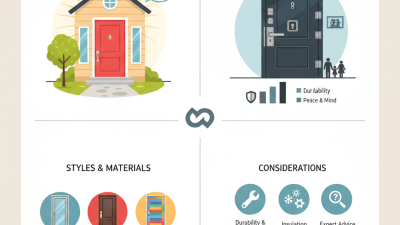
How to Find Discount Doors for Global Sourcing?

Finding discount doors for global sourcing requires more than locating the lowest factory quotation. The real task is balancing price, performance, compliance, and delivery risk. A door priced at $42 may become $68 after packaging, ocean freight, duties, inspection, and inland transport. Small details matter. Check the steel gauge, core material, coating thickness, hardware grade, and carton protection. Request a complete specification sheet before comparing suppliers.

John McClain, an international door-sourcing consultant, explains, “A discount matters only when the door still performs.” This principle should guide every supplier conversation. Ask for production photos, test reports, factory references, and a physical sample. Confirm minimum order quantities, lead times, payment terms, and Incoterms in writing. A factory may offer discount doors, yet quietly reduce packaging or replace approved components. That saving can disappear after installation.

Experience also shows that supplier location alone does not prove sourcing value. Compare at least three quotations using the same specifications. Review landed cost, not only the unit price. Independent inspections can reveal warped panels, uneven paint, weak hinges, or damaged edges before shipment. Still, no process is perfect. A clean sample may not represent every production batch. Supplier records can also be incomplete. That is why repeat inspections and clear acceptance standards remain important. Global sourcing works best when the buyer stays curious, documents decisions, and treats every attractive discount as a question rather than a conclusion.

How to Find Discount Doors for Global Sourcing?

Define Discount Doors and Global Sourcing Requirements

Discount doors are doors offered below their usual market price. The reduction may come from excess inventory, discontinued finishes, bulk purchasing, or minor cosmetic flaws. A low price does not automatically mean poor quality. I have seen buyers save money when they separate appearance issues from structural defects. A scratched surface may be acceptable. A warped frame is not.

Global sourcing requirements should be defined before contacting suppliers. Record the exact width, height, thickness, swing direction, frame material, finish, and hardware needs. Specify performance requirements clearly. These may include moisture resistance, insulation, durability, and certified fire performance where applicable. Confirm which standards apply in the destination market. Ask for test reports, product drawings, inspection records, and sample photos. Also clarify packaging, minimum order quantity, production time, delivery terms, and responsibility for import documentation.

Details prevent expensive misunderstandings. For example, a door listed as 900 millimeters wide may exclude the frame. That small difference can stop installation. Request a physical sample when the project is large. Check its weight, edge treatment, hinge alignment, and protective packaging. In my experience, suppliers sometimes describe color differences too generally. “Dark wood” can mean several finishes. Written approval is safer. Still, no checklist is perfect. Requirements may change after site measurements, and budget pressure can encourage risky compromises. Review the specification again before placing an order.

Identify Reliable International Door Suppliers

How to Find Discount Doors for Global Sourcing?
Identify Reliable International Door Suppliers

Finding low-cost doors begins with checking the supplier, not chasing the lowest quotation. Request factory photos, production videos, material samples, and recent project references. A reliable supplier should explain core materials, surface treatments, hardware options, packaging, and production capacity clearly. Vague answers deserve caution.

Ask for complete technical drawings before placing an order. Confirm door dimensions, opening direction, fire ratings, moisture resistance, acoustic performance, and hardware specifications. Requirements differ between markets. Check whether test reports and certificates match your destination’s standards. Also review export experience, shipping terms, lead times, and replacement procedures. Small details matter.

Inspect a sample before mass production. Look closely at corner joints, frame alignment, hinges, seals, and protective wrapping. I once focused too heavily on unit price and overlooked weak packaging. Several panels arrived scratched. That mistake was expensive. A pre-shipment inspection can reduce similar risks, although it cannot remove every problem. Keep written records of approved samples and changes. Discuss payment stages carefully, with final payment linked to inspection results when practical. Reliable communication is often more valuable than a dramatic discount. Test it early. Notice response speed, technical accuracy, and willingness to admit limitations. A supplier that says “we need to verify” may be safer than one promising everything immediately.

How to Find Discount Doors for Global Sourcing? - Identify Reliable International Door Suppliers

Sourcing Region Common Door Categories Typical Construction Common Reference Sizes Indicative Bulk-Order Saving Potential Typical Production Lead Time Recommended Verification Evidence
East Asia Interior wood doors, steel security doors, aluminum doors, fire-rated doors Engineered wood, galvanized steel, aluminum alloy, mineral or honeycomb core 800 × 2,000 mm; 900 × 2,100 mm; custom sizes available Approximately 8–20% compared with small-quantity purchasing, depending on volume, finish, and packaging 25–60 days after approval of drawings and deposit Factory audit, production samples, material certificates, fire-test reports where applicable, and pre-shipment inspection
South Asia Decorative wood doors, metal doors, flush doors, institutional doors Solid or engineered timber, plywood-faced cores, mild steel, stainless steel 762 × 1,980 mm; 813 × 2,032 mm; 915 × 2,032 mm Approximately 6–18% for repeat orders or container-level purchases 30–75 days, depending on timber treatment and customization Timber legality documentation, moisture-control records, sample approval, dimensional inspection, and packing photographs
Southeast Asia Wooden entrance doors, molded doors, bathroom doors, aluminum doors Rubberwood or other engineered wood, molded skins, aluminum frames, moisture-resistant cores 700–900 mm width × 2,000–2,100 mm height Approximately 7–16% when designs are standardized and orders are consolidated 30–70 days, with additional time for custom finishes Moisture-resistance test results, coating specifications, sample panels, factory capacity review, and loading inspection
Eastern Europe Interior wood doors, apartment doors, fire-rated doors, acoustic doors Engineered timber, laminated panels, steel reinforcement, mineral wool cores 600–1,000 mm width × 1,900–2,300 mm height Approximately 5–15% for project orders and standardized specifications 20–55 days after technical approval Applicable conformity documents, acoustic or fire-performance reports, factory quality procedures, and batch inspection records
Mediterranean Europe Security entrance doors, glazed doors, aluminum systems, fire doors Powder-coated aluminum, galvanized steel, laminated timber, insulated cores 800–1,100 mm width × 2,000–2,400 mm height Approximately 4–12% for palletized or project-based orders 25–65 days, excluding special glazing or hardware procurement Performance declarations, hardware compatibility checks, coating specifications, dimensional reports, and independent inspection
North Africa and Middle East Steel security doors, fire doors, aluminum doors, commercial entrance doors Galvanized steel, aluminum alloy, insulated panels, mineral wool cores 900 × 2,100 mm; 1,000 × 2,200 mm; custom project sizes Approximately 6–15% for project quantities and locally compatible specifications 30–75 days, depending on coating, glazing, and hardware requirements Corrosion-protection data, fire-test documentation, salt-spray results where relevant, sample approval, and pre-shipment inspection
North America Residential entry doors, commercial steel doors, wood doors, fire-rated assemblies Fiberglass, steel skins, engineered wood, insulated foam or mineral cores 762 × 2,032 mm; 813 × 2,032 mm; 914 × 2,032 mm Approximately 3–10% for large commercial or builder-program purchases 20–60 days for standard products; longer for engineered assemblies Applicable building-code reports, fire-label documentation, product liability coverage, installation instructions, and quality inspection
Procurement note: Saving potential and lead times are planning ranges rather than quotations. Confirm the final price, minimum order quantity, shipping term, duties, certification requirements, packaging method, and warranty conditions through a written request for quotation.

Compare Prices, Materials, Quality, and Trade Terms

How to Find Discount Doors for Global Sourcing?

A low factory quote does not guarantee a low buying cost. Compare the landed price, including tooling, packaging, inspection, freight, insurance, duties, and inland delivery. UNCTAD’s Review of Maritime Transport 2023 states that over 80% of global trade by volume moves by sea. A delayed container can erase a small unit-price saving. Request identical specifications from every supplier. Compare door leaf thickness, core density, frame material, hardware grade, and finish durability. Steel may reduce purchase cost, while timber or aluminum can change maintenance and shipping expenses.

Quality needs measurable evidence. Ask for batch samples, production photos, test reports, and an independent pre-shipment inspection. Check air leakage, water resistance, wind load, thermal performance, and closing-cycle results against the destination market’s standards. The World Bank’s Logistics Performance Index 2023 highlights customs, tracking, and delivery reliability as important supply-chain factors. These details affect risk, not only speed. I once treated a cheaper hollow-core sample as equivalent to a reinforced model. It was not.

Trade terms also change the comparison. Under EXW, the buyer manages more transport and export risks. Under FOB or CIF, responsibilities differ, so confirm the exact Incoterms 2020 rule in writing. Calculate cost per usable door, not cost per carton. Add a realistic allowance for defects and replacement parts. A spreadsheet helps, but it cannot reveal warped frames after humid storage. Test that condition before placing a large order.

Verify Certifications, Samples, and Supplier Credentials

Finding discounted doors for global sourcing requires more than comparing unit prices. Certification checks should begin with the exact door model, materials, and destination market. Ask for current test reports, certificate numbers, issuing laboratories, and covered product dimensions. Then verify those details through the issuing body or an independent testing service. A document with an impressive stamp proves little if it names another factory.

Request a production sample before placing a large order. Inspect its frame joints, surface finish, hinges, seals, glass, and packaging. Measure the sample against the approved drawings. Take photographs during inspection, including labels and carton markings. A sample can look excellent while hiding inconsistent core materials. I once trusted a clean sample too quickly, and the later batch had uneven paint. That mistake was avoidable.

Supplier credentials deserve the same attention. Check the registered business name, factory address, export history, quality procedures, and available production equipment. Ask for recent customer references, but confirm them independently. A video call can reveal useful details, such as unfinished stock or borrowed showroom samples. Request a pre-shipment inspection with clear acceptance criteria. Keep records of approvals, revisions, and corrective actions. Cheap doors become expensive when replacements, delays, or customs questions appear. I still allow room for error, because factories and inspectors can miss defects. Clear evidence reduces that risk, but never removes it.

Negotiate Orders, Shipping, Customs, and Final Costs

How to Find Discount Doors for Global Sourcing?

A discounted door is not always a low-cost door. I compare the supplier’s unit price with tooling, packaging, inspection, inland transport, and payment fees. My early sourcing spreadsheets missed small charges. Those charges later became expensive lessons. Ask for tiered pricing at realistic quantities, then negotiate a written order schedule. Confirm material grade, dimensions, tolerances, defect limits, replacement terms, and inspection timing. A clear purchase order prevents costly arguments.

Shipping needs its own negotiation. According to UNCTAD’s Review of Maritime Transport 2024, ships carry over 80% of global merchandise trade by volume. Freight disruptions can therefore change the final price quickly. Request rates for several shipment sizes and clarify whether the quote includes port handling, documentation, insurance, and delivery to the warehouse. Use an agreed Incoterm, but verify every included service. Cheap freight can hide expensive destination charges. It happens.

Customs planning protects the discount. The World Bank’s 2023 Logistics Performance Index emphasizes customs efficiency and shipment predictability as key supply-chain factors. Confirm the correct HS classification, declared value, country of origin, and required product documents before ordering. The OECD reports that stronger trade facilitation can significantly reduce trade costs, especially in developing economies. Build a landed-cost sheet with unit price, freight, duty, taxes, brokerage, storage, and currency movement. Leave a contingency buffer. My imperfect rule is simple: if the final-cost calculation cannot be explained line by line, the order is not ready.

Questions? Give Us A Call!